
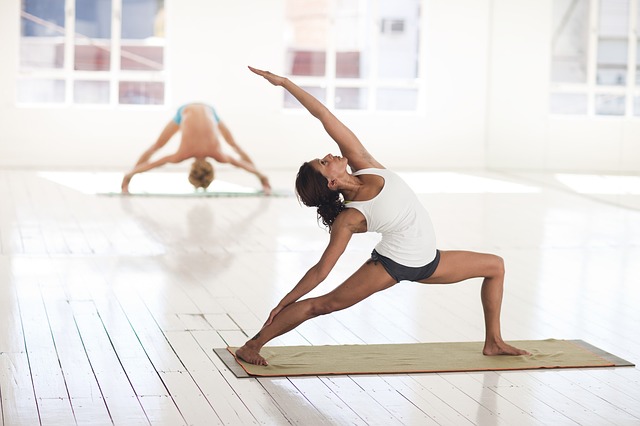
Motivating ourselves to practice yoga
Today’s blog is on motivating ourselves to begin or maintain a yoga practice. Most people agree that yoga has many health benefits. Yet many of us struggle to get to class or maintain a practice in our homes. Today’s article explores some of the barriers that keep us from carrying out something that is so good for us.
First and foremost, we do not tend to dive into the details of how yoga can personally benefit us. One way we can make this connection is by looking at the ailments to which we are predisposed and then learn specific postures that can help alleviate those conditions. What could be a better motivator than the prospect of getting relief from whatever it is that ails us?
There is a great article in The Yoga Journal on 38 ways yoga improves health. https://www.yogajournal.com/lifestyle/count-yoga-38-ways-yoga-keeps-fit. The two benefits that stand out to me the most from the aforementioned article are: 1. It prevents cartilage and joint breakdown. 2. It protects the spine since postures like back bends, forward bends and twists can help keep the spinal discs supple. Given that back problems are one of the single most leading causes of disability in the world today, practicing yoga for the simple reason of keeping our spine supple should serve as enough motivation to get us going.
Another challenge with yoga can be finding the right class or style of yoga that suits our needs. Many people do not realize that not all yoga classes are created equal. There is a great variation of styles in yoga. There is also a great variation in training given to yoga instructors. If one class does not work for you, try a different form. Do not give up! If your community is limited in options, there are a rich array of videos and even books demonstrating yoga postures in them.
One of my favorite books is called Yoga the Iyengar Way by Silva, Mira and Shyam Mehta. Not only are there excellent illustrations and instructions for each posture, but there is an index for remedial programs. If you suffer from depression, for example, it recommends certain postures to assist with this ailment.
Another barrier many of us face is finding the time to keep up a regular practice. Even just selecting three postures each day can go a long way to a good sense of well-being. That makes it easier to carve out one day a week for a more thorough work-out.
One other issue that can sometimes keep people from practicing yoga is managing the difficult emotions that arise from this practice. Certain postures can make us more prone to releasing our emotions. Doing back bends, for example, open up the chest area and can have the effect of softening us to let go of difficult emotions. However, if we look at the emotional barriers that arise during our practice, we have the ability to work through them in a safe environment. This prevents us from having to face them when they arise unexpectedly in other places such as work settings or in interpersonal relationships.
Not only do we sometimes experience emotional challenges in trying to execute a yoga pose, but we can also experience physical barriers that may keep us from wanting to practice. We can easily become frustrated when we cannot execute a pose due to pain or lack of agility. Remembering to be kind to ourselves and realizing it is a process can go a long way in keeping us dedicated. The process, not the “perfect pose” has value in and of itself. Leaning into that process goes a long way in promoting our physical well-being.
Ask yourself today: 1. What is stopping me from beginning or continuing a practice that has so many health benefits? 2. What strategies can I use to motivate myself to begin/continue with my practice? 3. What health ailments do I experience and which yoga postures can best assist with those ailments? 3. What form of yoga speaks to me the most? 4. How can I best work through any physical and emotional barriers that I experience in the midst of my practice?

